
Home › Forums › Feeding Issues › General Feeding Issues › freaking out-Trace has given up formula
- This topic has 37 replies, 1 voice, and was last updated 19 years, 4 months ago by
Anonymous.
-
AuthorPosts
-
June 3, 2007 at 7:54 pm #35487
Anonymous
Inactiveits been about 4 days now….he refuses all formula! he will eat food and drink water. thats it. so now i am replacing all water with rice milk as a desperate attempt to get some calories into him. i KNOW rice milk is no substitute for formula/whole milk. it does not have enough nutrition. he will only take a bottle of neocate before bed. he will not take it any other cups i have tried everything. does anyone know what vitamins, minerals, etc he will be lacking in this diet? should i get him some sort of supplements? i cant get to a nutritionist for at least another month!
this is generally what he eats:
avacodo
banana
applesauce
blueberries
gluten free chicken nuggets
ham
rice bread
almond butter
rice noodles
broccoli
sweet potato
fruit smoothies
i try to add flax seed oil to smoothiesJune 3, 2007 at 7:56 pm #35488InactiveLooks like he is taking a great variety to me. He is over a year, so he could come off formula. I agree, not much fat in rice milk, so maybe you will need some of that, but otherwise, he looks like he is eating a great variety…..
June 3, 2007 at 8:59 pm #35495InactiveNatalia, I’m afraid I don’t know much about formula, but I think I read somewhere that you could get flavor packets for the Neocate. Do you think he would go for that?
June 3, 2007 at 9:23 pm #35497InactiveBensmama wrote:
Natalia, I’m afraid I don’t know much about formula, but I think I read somewhere that you could get flavor packets for the Neocate. Do you think he would go for that?
you know, i just went and checked neocate.com. they have these e028 splash tropical flavored powder mixes that are like formula. this looked like a really good idea…..until i read the ingredients. the third ingredient is sugar

http://www.neocate.com/aaa_neocate/732-pediatric-eo28–ingre dients.html
i hate formula companies.
June 3, 2007 at 10:12 pm #35499Inactivewell my aunt did rice milk with me cousin @ 1 yr. the ped said he was fine because he at so much. and he did end up great.. healthy, big.. etc. soo maybe if he gets other fats and protiens it might be o.k??? and a multi-vitamin would be great. i have thought about doing it with shane too if goats doesnt end up working.
hopefully someone with more experience can help us there.
June 4, 2007 at 9:11 am #35524hellbennt
Keymasterblack strap molasses has iron, calcium & potassium

I keep trying to get creative to add it into Ari’s foods- it goes nicely on baked sweet potato ‘fries’ (slices baked in olive oil) and might go into a smoothy? also maybe mixed in w/ the almond butter on rice bread?
can you make pancakes? you can ‘sneak’ food into pancakes…also do a search for ‘bubba bread’ there was a recipe somewhere around that is high in nutrition & I think it’s wheat free, etc
& tums has calcium…not sure where you are with reflux/meds…
hellbennt2007-6-4 9:19:1
June 4, 2007 at 9:20 am #35526Inactivelaura where do i get the black strap molasses?
my biggest concerns are fats and protein. if he were drinking whole milk, it has 8 grams of fat and 8 grams of protein-rice milk has 1 gram of protein and i think 2 grams of fat
the olive oil on sweet potato fries is a good idea for fats.
June 4, 2007 at 9:44 am #35528Inactivehey natalia.. just letting you know that the almond breeze has soy in it, i just found out. i am not sure id there are other almond milks though. also.. maybe you can give flax oil every day to add a lot of fats and i would def. give fish oil for kids a try! i know you arent “keene” on it.. but it says its safe from the toxins on the bottle.. and its REALLY high in omega fats. and if you give egg yolk and keep giving the chicken to him there is protien.
also.. did you try mixing neocate and VANILLA rice milk together??
and .. i am looking into doing an alternitive to milk as well.. because i keep reading about pasturized/ homogenized milk not being nutritious at all! here’s a link if your interested. it also has other ideas on milks in it.. http://www.cure-guide.com/Natural_Health_Newsletter/Milk/mil k.html.
June 4, 2007 at 10:04 am #35529Inactiveyes i agree that raw milk is so much better. pasturization takes all the good things out of it like probiotics, etc. if you go to the mothering boards there is so much good info on there and i know a lot of people there drink raw milk.
i bought some almond milk and when i got home i saw it had soy in it 🙁
i saw this other brand at whole foods but it had too much sugar.
i havent tried mixing the rice milk in the neocate instead of water, i may try that thanks.
im also reading about the fish oil at the mothering boards because i have seen people there using certain kinds that are safer.
i havent tried eggs with Trace yet, im really scared too, because i know how he reacts to dairy…and the effects last for days…he becomes a little demon child LOL…and i know a lot of kids that are sensitive to dairy are sensitive to eggss…
June 4, 2007 at 10:14 am #35530Inactivelauren, here is a thread on raw milk:
http://www.mothering.com/discussions/showthread.php?t=676558 &highlight=raw+milk
June 4, 2007 at 10:23 am #35531Inactivenatalia.. its soo hard with the raw milk! i would do it for myself.. but i get scared of shane getting sick from it! would you try it??! they say that kids are allergic/ intolerace to processed milk not raw…??
also.. the egg yolk isnt allergenic just the white.. shane cant do eggs but we can give the yolk.. its very fattening which i love…and has the protien.
June 4, 2007 at 10:28 am #35532Inactivewell i dont agree with the kids are only allergic to processed milk thing…because if you are intolerant to milk protein it doesnt make a difference if the milk is processed or not….there is still milk protein in it ykwim?
as for being worried about raw milk, there are a lot of good threads about that on that mothering site. i am still doing my research on it. i would try it, but i wouldnt give any to Trace as he has problems with milk proteins.
thanks for the info on the eggs…
June 4, 2007 at 12:17 pm #35539InactiveThere was just an article about raw milk in our local newspaper today. A man was selling it, which is illegal in Canada. They were saying that it’s very dangerous, because you can get ecoli from it, but the bigger concern was that you can get salmonella which you can carry not knowing and pass on to others who are susceptible. I was very upset by it. I’m personally against it.
June 4, 2007 at 12:35 pm #35546Inactivei am not really a fan of mainstream media ,they tend to scew things for hype.
you should check this article, if you scroll down, read “raw milk safety”
The Health Benefits of Raw Milk
 There’s little mention in the mainstream media these days, of traditional foods having healing properties. Sure, there’s a ton of hype touting unfermented soy products, vegetable oils and supplements as modern saviors, but in reality, these items have risk-to-benefit ratios like many drugs do.
Few people are aware that clean, raw milk from grass-fed cows was actually used as a medicine in the early part of the last century. That’s right. Milk straight from the udder, the “stem cell” of foods, was used as medicine to treat, and frequently cure some serious chronic diseases. From the time of Hippocrates to until just after World War II, this “white blood” nourished and healed uncounted millions.
Clean raw milk from pastured cows is a complete and properly balanced food. You could live on it exclusively if you had to. Indeed, published accounts exist of people who have done just that. What’s in it that makes it so great? Let’s look at the ingredients to see what makes it such a powerful food.
Proteins
Our bodies use amino acids as building blocks for protein. Depending on who you ask, we need 20-22 of them for this task. Eight of them are considered essential, in that we have to get them from our food. The remaining 12-14 we can make from the first eight in the chemical factories of our bodies.
Raw cow’s milk has all 20 of the standard amino acids, saving our bodies the work of having to convert any into usable form. About 80% of the proteins in milk are caseins- reasonably heat stable but easy to digest. The remaining 20% or so fall into the class of whey proteins, many of which have important physiological effects (bioactivity). Also easy to digest, but very heat sensitive, these include key enzymes (specialized proteins) and enzyme inhibitors, immunoglobulins (antibodies), metal-binding proteins, vitamin binding proteins and several growth factors.
Current research is now focusing on fragments of protein (peptide segments) hidden in casein molecules that exhibit anti-microbial activity.
Lactoferrin, an iron-binding protein, has numerous beneficial properties including (as you might guess) improved absorption and assimilation of iron, anti-cancer properties and anti-microbial action against several species of bacteria responsible for dental cavities. Recent studies also reveal that it has powerful antiviral properties as well.
Two other players in raw milk’s antibiotic protein/enzyme arsenal are lysozyme and lactoperoxidase. Lysozyme can actually break apart cell walls of certain undesirable bacteria, while lactoperoxidase teams up with other substances to help knock out unwanted microbes too.
The immunoglobulins, an extremely complex class of milk proteins also known as antibodies, provide resistance to many viruses, bacteria and bacterial toxins and may help reduce the severity of asthma symptoms. Studies have shown significant loss of these important disease fighters when milk is heated to normal processing temperatures.
Carbohydrates
Lactose, or milk sugar, is the primary carbohydrate in cow’s milk. Made from one molecule each of the simple sugars glucose and galactose, it’s known as a disaccharide. People with lactose intolerance for one reason or another (age, genetics, etc.), no longer make the enzyme lactase and so can’t digest milk sugar. This leads to some unsavory symptoms, which, needless to say, the victims find rather unpleasant at best. Raw milk, unlike pasteurized, has it’s milk sugar enzyme, lactase, undamaged, and so, may allow people who traditionally have avoided milk to give it another try.
Lactose provides milk’s natural complement of Lactobacilli bacteria with the raw material from which to make lactic acid (the sour taste in fermented dairy products). Besides having known inhibitory effects on harmful species of bacteria, lactic acid boosts the absorption of calcium, phosphorus and iron, and has been shown to make milk proteins more digestible by knocking them out of solution as fine curd particles.
Fats
Approximately two thirds of the fat in milk is saturated. Good or bad for you? Saturated fats play a number of key roles in our bodies: from construction of cell walls and key hormones to providing energy storage and padding for delicate organs, to providing a vehicle for carrying important fat-soluble vitamins (see below).
All fats cause our stomach lining to secrete a hormone (CCK) which, aside from boosting production and secretion of digestive enzymes, let’s us know we’ve eaten enough. With that trigger removed, non-fat dairy products and other fat-free foods can potentially help contribute to over-eating.
Consider that, for thousands of years before the introduction of the hydrogenation process (pumping hydrogen gas through oils to make them solids) and the use of canola oil (from genetically modified rapeseed), corn, cottonseed, safflower and soy oils, dietary fats were largely saturated and often animal based. Healthy cultures all over the world thrived on the use of butter, lard, tallows, poultry fats, fish oils, tropical oils such as coconut and palm, and cold pressed olive oil.
Now consider that prior to 1900, very few people died from heart disease. The introduction of hydrogenated cottonseed oil in 1911 (as Crisco) helped begin the move away from healthy animal fats, and toward the slow, downward trend in cardiovascular health from which millions continue to suffer today.
CLA, short for conjugated linoleic acid and abundant in milk from grass-fed cows, is a heavily studied, polyunsaturated Omega-6 fatty acid with promising health benefits. It certainly does wonders for rodents, judging by the hundreds of journal articles I’ve come across! There’s serious money behind CLA, so it’s a sure bet there’s something to it.
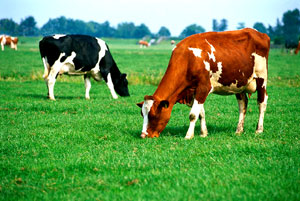 Among CLA’s many potential benefits: it raises metabolic rate, helps remove abdominal fat, boosts muscle growth, reduces resistance to insulin, strengthens the immune system and lowers food allergy reactions. As luck would have it, grass-fed raw milk has from 3-5 times the amount found in the milk from feed lot cows.
See my Fat Primer for a better understanding of saturated fats and fatty acids and their impact on our health.
Vitamins
Volumes have been written about the two groups of vitamins, water and fat soluble, and their contribution to health. Whole raw milk has them all, and they’re completely available for your body to use. Whether regulating your metabolism or helping the biochemical reactions that free energy from the food you eat, they’re all present and ready to go to work for you.
Just to repeat, nothing needs to be added to raw milk, especially that from grass-fed cows, to make it whole or better. No vitamins. No minerals. No enriching. It’s a complete food. Heated milk must have destroyed components added back in- especially the important fat soluble vitamins A and D.
Minerals
Our bodies, each with a biochemistry as unique as our fingerprints, are incredibly complex, so discussions of minerals, or any nutrients for that matter, must deal with ranges rather than specific amounts. Raw milk contains a broad selection of completely available minerals ranging from the familiar calcium and phosphorus on down to trace elements, the function of some as yet still rather unclear.
A sampling of the health benefits of calcium, a ‘macronutrient’ abundant in raw milk includes: reduction in cancers, particularly of the colon; higher bone mineral density in people of every age, lower risk of osteoporosis and fractures in older adults; lowered risk of kidney stones; formation of strong teeth and reduction of dental cavities, to name a few.
An interesting feature of minerals as nutrients is the delicate balance they require with other minerals to function properly. For instance, calcium needs a proper ratio of two other macronutrients, phosphorus and magnesium, to be properly utilized by our bodies. Guess what? Nature codes for the entire array of minerals in raw milk to be in proper balance to one another thus optimizing their benefit to us.
Enzymes
The 60 plus (known) fully intact and functional enzymes in raw milk have an amazing array of tasks to perform, each one of them essential for one key task or another. Some of them are native to milk, and others come from beneficial bacteria growing in the milk. Just keeping track of them would require a post-doctoral degree!
To me, the most significant health benefit derived from food enzymes is the burden they take off our body. When we eat a food that contains enzymes devoted to its own digestion, it’s that much less work for our pancreas. Given the choice, I’ll bet that busy organ would rather occupy itself with making metabolic enzymes, letting food digest itself.
The amylase, bacterially-produced lactase, lipase and phosphatase in raw milk, break down starch, lactose (milk sugar), fat (triglycerides) and phosphate compounds respectively, making milk more digestible and freeing up key minerals. Other enzymes, like catalase, lysozyme and lactoperoxidase help to protect milk from unwanted bacterial infection, making it safer for us to drink.
Cholesterol
Milk contains about 3mg of cholesterol per gram – a decent amount. Our bodies make most of what we need, that amount fluctuating by what we get from our food. Eat more, make less. Either way, we need it. Why not let raw milk be one source?
Cholesterol is a protective/repair substance. A waxy plant steroid (often lumped in with the fats), our body uses it as a form of water-proofing, and as a building block for a number of key hormones.
It’s natural, normal and essential to find it in our brain, liver, nerves, blood, bile, indeed, every cell wall. The best analogy I’ve heard regarding cholesterol’s supposed causative effects on the clogging of our arteries is that blaming it is like blaming crime on the police because they’re always at the scene.
Seriously consider educating yourself fully on this critical food issue. It could, quite literally, save your life. See my Cholesterol Primer (also still under construction) to learn the truth.
 Beneficial Bacteria
Through the process of fermentation, several strains of bacteria naturally present or added later (Lactobacillus, Leuconostoc and Pediococcus, to name a few) can transform milk into an even more digestible food.
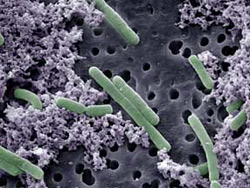
With high levels of lactic acid, numerous enzymes and increased vitamin content, ‘soured’ or fermented dairy products like yogurt and kefir (made with bacteria and yeast, actually) provide a plethora of health benefits for the savvy people who eat them. Being acid lovers, these helpful little critters make it safely through the stomach’s acid environment to reach the intestines where they really begin to work their magic. (Above right, Lactobacillus casei)
Down there in the pitch black, some of them make enzymes that help break proteins apart- a real benefit for people with weakened digestion whether it be from age, pharmaceutical side-effects or illness.
Other strains get to work on fats by making lipases that chop triglycerides into useable chunks. Still others take on the milk sugar, lactose, and, using fancy sounding enzymes like beta-galactosidase, glycolase and lactic dehydrogenase (take notes, there’ll be a quiz later!), make lactic acid out of it.
As I mentioned way up yonder in the Carbohydrate section, having lactic acid working for you in your nether regions can be a good thing. Remember? It boosts absorption of calcium, iron and phosphorus, breaks up casein into smaller chunks and helps eliminate bad bugs. (I told you there’d be a quiz!)
Raw milk is a living food with remarkable self-protective properties, but here’s the kick: most foods tend to go south as they age, raw milk just keeps getting better.
Not to keep harping on this, but what the heck: through helpful bacterial fermentation, you can expect an increase in enzymes, vitamins, mineral availability and overall digestibility. Not bad for old age!
A Word About Diet In General
Use common sense and stick with whole, unprocessed foods, free from genetic tweaking (there’s still just too much conflicting information out there on that topic), and you’ll likely be ahead of the game.
Cook your foods minimally, and you’ll be even better off. Learn about sprouting and fermentation. Question everything before letting it past your lips.
Explore what worked for countless generations before ours, and put it to work for yourself today. You can achieve great health by diet alone. I’ve done it, and so can you!
Raw Milk Safety?
No website about raw milk would be complete without a discussion of bacteria, both good and bad. And that’s a key point. Not all bacteria are bad characters. (At right, Lactobacillus brevis, one of the good guys…)
The news is full of Salmonella and E. coli outbreaks these days. No food seems to be immune. What is generally swept under the rug in discussions about raw milk, however, is the protection given by lactic acid-producing bacteria normally present.
In what microbiologists call the principal of Competitive Exclusion, non-pathogenic bacteria like, say, Lactobacillus acidophilus, can actually limit or kill bad bugs like Campylobacter jejeuni (responsible for the sale of lots of anti-diarrheal medicine).
It seems lactic acid is really hard on the bugs that can make us sick if their numbers get too high. Nice system!
But make no mistake, ANY food can be contaminated. It usually boils down to how it was produced, handled and packaged. (Certainly, low quality raw milk in the mid-1800’s, contaminated with tuberculosis bacilli, had its unwanted share of the limelight). Lots of variation exists in each of these areas. And besides, not many foods have built-in lactic acid producers policing the neighborhood.
Take the pasteurization process, for instance. While it certainly destroys bacteria, good and bad (and thus reduces the potential for infection), it’s far from flawless.
Pasteurized milk still sickens people, and in far greater numbers than the more heavily regulated raw product. The real question ought to be, how are pathogens getting anywhere near cows to begin with.
The Swedes have practically eliminated Salmonella from their herds. At one dairy feeding organic grass to their cows, the very manure is pathogen free!
Raw milk from cows fed diets heavy in grain, soybeans and cottonseed meal, etc., apparently cannot effectively protect itself from pathogenic infection. Everyone agrees, it must be pasteurized.
Heating milk renders it less capable of defense against subsequent infection. With the destruction of its tiny bacterial lactic acid factories and other heat sensitive anti-microbial substances, it can no longer protect itself as well.
To repeat: without the minerals and nutrients from a diet of fresh green grass that millions of years of evolution have coded for, the milk is just not made with the normal bevy of bactericidal ingredients designed by Nature to stifle unwanted microbial growth.
Know the source of your raw milk and demand that it be from grass-fed animals. Preferably organic.
I can’t stress strongly enough that the health of the cows, how they’re fed, (green grass or starchy grains), where they’re confined (pasture or manure-laden pen) and how the milk is collected all contribute to the safety of the finished product.
Ultimately, you’ll have to draw your own conclusions, but don’t accept the word of any so-called expert (including this site) when it comes to feeding yourself and your family. Question everything you put in your mouth.
Seek out information on how your food was produced. Find out what substances were added or removed to enhance somebody else’s profit margin.
Don’t let the government and the giant food companies do your homework/thinking for you. Your health must be in your hands alone!
http://www.raw-milk-facts.com/raw_milk_safety.html
nataliachick72007-6-4 12:35:43
June 4, 2007 at 12:38 pm #35547Inactivelori did you ever get my pm? i just realized my box was full and i just cleaned it out.
-
AuthorPosts

- You must be logged in to reply to this topic.
